
Raster vs. Vector Images: Which Format Is Best for Custom Signs?
High-quality visuals play a critical role when investing in custom signage for your business. The difference between raster vs. vector images directly affects how sharp, clean, and professional your brand appears at any scale. Crisp, well-rendered graphics make a stronger impact, especially in competitive markets like Wylie or Plano.
Proper file formats prevent your printed materials from appearing blurry or unprofessional. Local businesses deserve high impact visual solutions that communicate their brand message with total clarity. Accurate design preparation saves time and resources during the manufacturing and installation phases.
Choosing Between Raster vs. Vector Images for Graphics
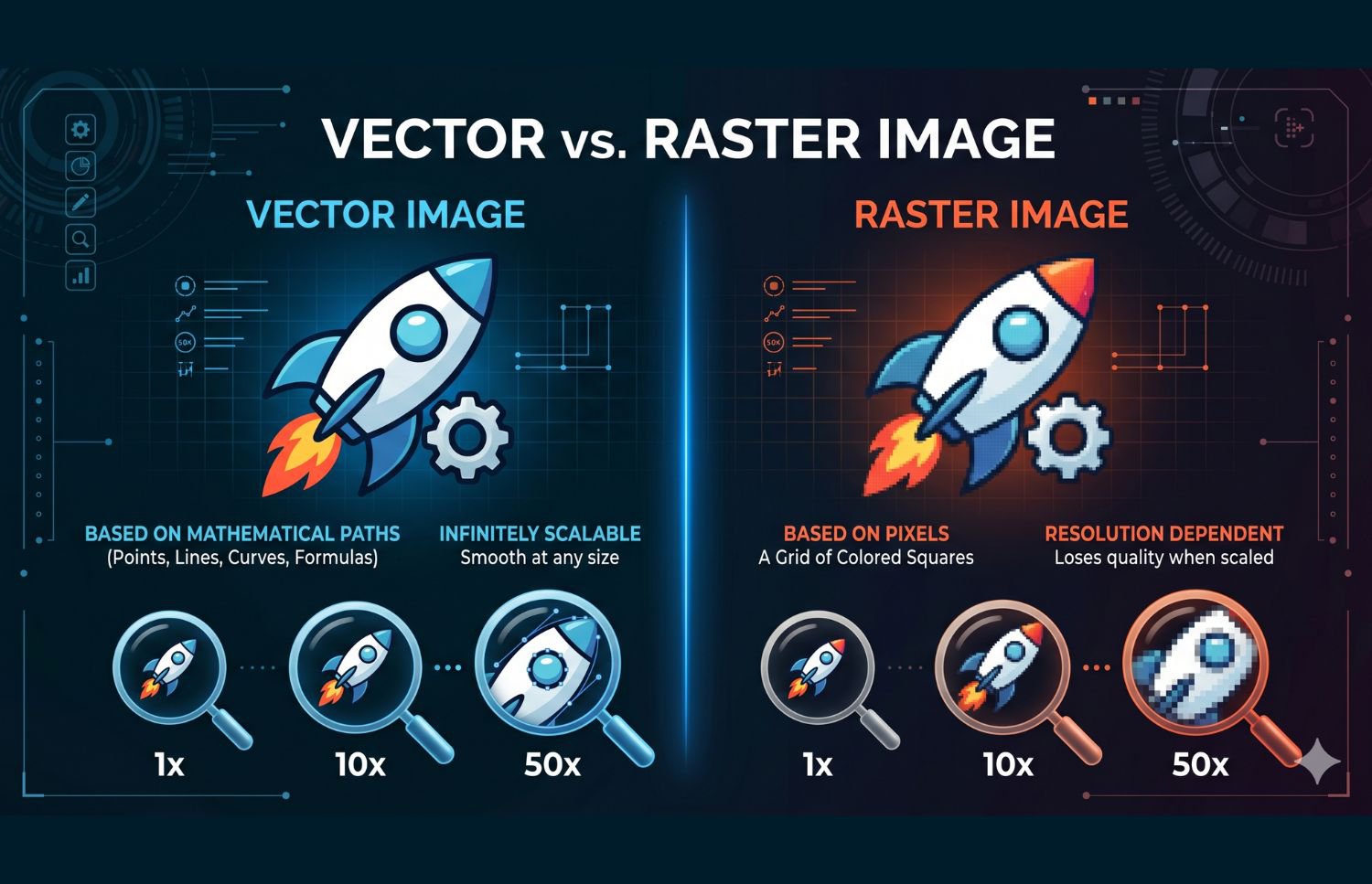
Photographs usually consist of tiny colored squares known as individual pixels. These files work perfectly for capturing complex details and subtle color gradients in photography. For instance, most digital cameras display these formats because they handle rich information well.
Enlarging a pixel based file often leads to significant loss of quality. Scaling these designs upward causes the edges to look jagged or distorted on signs. Understanding raster vs. vector images helps you choose the right file for specific applications.
Moreover, high resolution files are necessary for photographs on printed banners. Designers use these formats primarily for web content and smaller promotional items. Standard extensions like JPEG signify that your artwork uses this particular format for your project.
Understanding the Power of Vector Images
Mathematical paths define the shapes and lines found within high quality vector files. These unique files allow your designs to scale infinitely without losing any clarity. Specifically, you can expand a small logo to fit a billboard with perfect sharpness.
Similarly, this format ensures that every curve remains crisp regardless of final size. Typography and brand logos perform best when created using these sophisticated mathematical equations. Professional sign manufacturers prefer these files because they provide the cleanest possible results today.
In addition, maintaining visual integrity requires a scalable approach to brand assets. Modern design standards dictate that logos remain in this format for long term utility. Comparing raster vs. vector images shows why paths are superior for large architectural projects.
Scaling Raster vs. Vector Images for Large Signage
Resolution dependency represents the most significant technical difference when comparing raster vs. vector images. Pixel counts determine the maximum size a photo can reach before degradation occurs. Conversely, vector files remain independent of resolution because they rely on connecting points.
Additionally, recent industry data highlights why visual precision is critical for local brands. Reports show that out of home advertising recently reached record levels within the current competitive marketplace. Such growth means your signage faces more competition for consumer attention than ever.
Therefore, choosing the correct format ensures that your professional signs look polished. Your choice impacts how customers perceive the quality and reliability of your business. Distinguishing raster vs. vector images is the first step toward achieving professional results.
Why Vector Files Are Preferred for Signage
Large format signs require extreme scalability to maintain a professional appearance from distance. High quality graphics ensure clean finishes for dimensional letters and illuminated lobby signs. Consistent branding across various locations depends heavily on using these versatile digital files constantly.
Consider these specific advantages when selecting the right format for branding:
Scalability allows a single design to fit any physical space perfectly.
Clean edges ensure that cutters produce precise letters for storefront windows.
Small file sizes make sharing complex architectural signage designs very efficient.
Infinite resizing capabilities mean your logo looks perfect on vehicle wraps.
Vector formats allow for easy color adjustments to match brand guidelines accurately.
Ultimately, selecting the right file type is essential for achieving the best results. Using raster vs. vector images correctly will ensure your brand looks professional and polished.
Optimizing Your Files for Professional Results
Expert designers review your artwork to ensure every file is ready for production. They often convert low resolution logos into paths to improve final output quality. This meticulous process guarantees that your physical signs match your digital identity perfectly.
Technical specialists provide tailored recommendations based on the requirements of your project. They understand how different materials react to various ink types and printing processes. Clear communication regarding raster vs. vector images prevents delays and ensures your vision works.
Furthermore, professional consultation helps you navigate the complexities of various file types. Experts bridge the gap between creative concepts and the realities of sign manufacturing. Every detail matters when creating a visual solution that represents your company properly.
Serving Local Areas With Raster vs. Vector Images Expertise
Local businesses in Rowlett require signage that stands up to close inspection. Current marketing research indicates that moving from chaos to clarity is essential for modern brand success. This clarity begins with technical precision in your visual assets and brand strategies.
By extension, professional designers help you bridge the gap between concepts and installations. They focus on delivering quality results that enhance your visibility in competitive markets. Reliable service ensures that your custom signs arrive on time and meet expectations.
In conclusion, high quality production standards lead to better engagement with your audience. Your brand deserves a dedicated team that prioritizes precision in every local project. Learning about raster vs. vector images ensures your designs are optimized for visual impact.
Achieve Flawless Results With Expert Guidance
Understanding the technical nuances of raster vs. vector images is vital for signage. Your business visibility depends on clean designs that attract attention and build trust. Quality visual communication starts with choosing the right format for every specific application.
In summary, precise execution during the manufacturing process leads to more effective advertising. Signsmiths of Texas helps local partners navigate the design process for superior visibility. Please call our team today to discuss your specific design and installation needs.